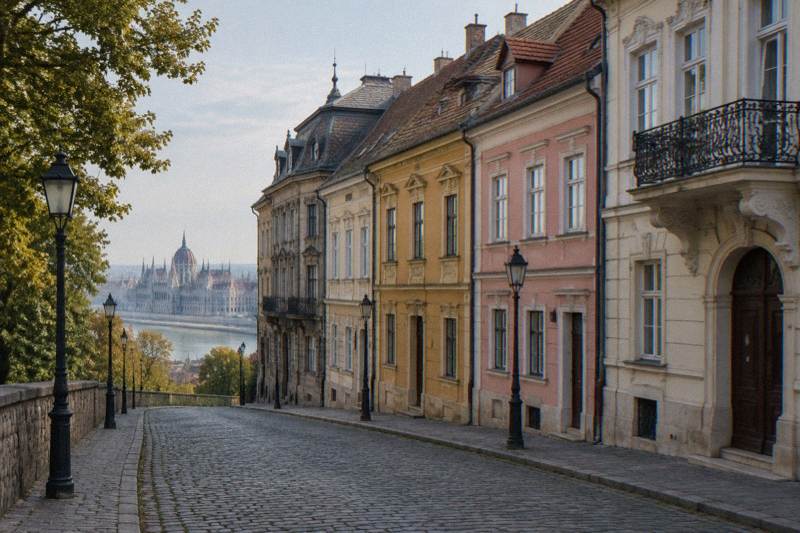
Budapest On A Budget: What Is Actually Free And What Costs Money
Budapest on a budget is less about hunting discounts and more about knowing which parts of the city cost nothing and which parts have a ticket. The walks, the hills and the riverbank are free. The interiors, the towers and the baths are not.
Short answer
Budapest on a budget works because the core sights cost nothing to walk: 45 free walking tours run across GuruWalk and freetour.com, Buda Castle Hill's streets are free, and the Citadella park is free. The paid parts are specific and priced in HUF: the Parliament interior, museum tickets, the Bastion's upper terraces and the baths.
What Does Budapest On A Budget Actually Look Like?
A budget Budapest trip spends almost nothing on the sights themselves. The 45 free walking tours listed on this site, the castle hill streets, the Citadella park, Heroes' Square and the Danube banks all cost nothing to walk. The money goes to the Parliament interior, museum tickets, the baths and transport, and each of those has a stated price in forints.
The honest version of a cheap Budapest plan starts with a split that most visitors miss: the city's outdoor layer and its indoor layer are priced completely differently. Every hill, square, bridge promenade and riverbank in the central city is public ground you can walk without a ticket. Almost every interior behind those facades, the Parliament's debating chamber, the Matthias Church nave, the National Gallery's halls, the thermal pools, carries its own price set by its own operator, and no rule crosses from one operator to another.
That split is why the phrase "Budapest on a budget" can mean two very different trips. A visitor who treats the city as a walking city, moving between free outdoor ground and the free guided walks, can spend days without buying a single sightseeing ticket. A visitor who assumes the big names are free because the squares around them are will buy four or five interior tickets without planning to. The difference is not luck. It is knowing where each operator's paid part begins.
This guide walks through that split section by section: the free walking tours that anchor a cheap itinerary, the castle hill and what it charges for, the museums that open free on their own named days, the landmarks with standard tickets, and the transport rules that decide whether you pay at all. Every price below comes from the operator's own published page, and every free claim carries its condition in the same breath. Some free-entry claims are disputed, and this page leaves them open.
One framing note before the details. The question "is Budapest cheap" has its own answer with its own numbers, and it is a separate piece: read Is Budapest Cheap? for the cost-of-living side of the question. This page is about the sightseeing layer only.
Which Free Walking Tours Anchor A Cheap Budapest Itinerary?
Yes, and they are the backbone of a budget trip. This site lists 45 free walking tours across GuruWalk and freetour.com, every one free or pay what you want, with no money figure attached to any walk. English-language options meet at St Stephen's Basilica, Madach Imre Square and other central points, and their durations run from 1 hour 45 minutes to 4 hours.
The free walking tour is the single biggest lever on a Budapest budget because it replaces the paid guided tour, the hop-on bus commentary and the guidebook at once. The 45 free walking tours listed here are run by independent local guides, with every reservation made on GuruWalk or freetour.com. None of them charges a booking price. The payment model is pay what you want, which means the price is genuinely zero until you decide otherwise, and the etiquette of that decision has its own article in How Much To Tip On A Free Walking Tour In Budapest.
For a budget plan the practical question is which walk to start with, and the roster answers it with ratings, review counts and meeting points rather than with adjectives. The three walks below are the featured English-language options that cover the most ground for nothing.
| Walk | Platform | Guide or operator | Rating and reviews | Duration | Language | Meets at |
|---|---|---|---|---|---|---|
| Luna Tours English Castle Walk | GuruWalk | Luna Tours Budapest | 4.67 out of 5 across 1,281 GuruWalk reviews | 2 hours 15 minutes | English | Holy Trinity Square |
| Interworld Bilingual Castle Walk | GuruWalk | Interworld Tours | 4.73 out of 5 across 445 GuruWalk reviews | 2 hours 30 minutes | English and Spanish | Szell Kalman Square |
| Robert & István Best Of Walk | GuruWalk | Robert & István | 5 out of 5 across 8,893 GuruWalk reviews | 2 hours 30 minutes | English | St Stephen's Basilica |
The Robert & István Best Of Walk is the largest English review pool on the whole roster: 5 out of 5 across 8,893 GuruWalk reviews, 2 hours 30 minutes, meeting at St Stephen's Basilica. The Luna Tours and Interworld castle walks cover the hill side of the city, both bilingual or English, both meeting inside the Castle District itself at Holy Trinity Square and Szell Kalman Square. Choosing between a city walk and a castle walk on day one is the first real budget decision, because both cost the same: nothing.
Beyond the featured cards, the roster runs deep in every neighbourhood. The Bilingual WWII Jewish Quarter Walk from Budapesttours.es holds 4.79 out of 5 across 9,733 GuruWalk reviews in English and Spanish, meeting at Madach Imre Square. The In-Depth Walk runs 3 hours 30 minutes in English from St Stephen's Basilica, rated 4.98 out of 5 across 2,151 GuruWalk reviews, and is the longest featured option on the site. For a full picture of the format and its economics, see Are Free Walking Tours Really Free?.
Is Buda Castle Hill Free To Explore?
The streets, ramparts and open courtyards of Buda Castle Hill cost nothing to walk. The Hungarian National Gallery, the Budapest History Museum, the Matthias Church interior and tower and the funicular are separate paid records. Fisherman's Bastion keeps its lower terraces free at all times, while the upper terraces and turrets are ticketed in the listed paid periods.
Buda Castle Hill is the best worked example of the two-layer city. The hill itself, its lanes, its ramparts and its open courtyards, is free public ground at every hour. A visitor can spend a full morning on the hill without paying a forint, and many do. But the hill is not one attraction with one ticket. It is a district with several operators inside it, and each operator prices its own door.
The paid doors on the hill are specific. The Hungarian National Gallery and the Budapest History Museum's Castle Museum are paid museum records. The Matthias Church sells its interior at HUF 3,400 and its tower at HUF 4,000 as two separate tickets, while the exterior costs nothing. The funicular up the hill is a separate BKV ticket, not part of BKK's pass system, and there is a free alternative: the stairs up Castle Hill are free. The full picture of that choice is in Is There A Free Way Up To Buda Castle?.
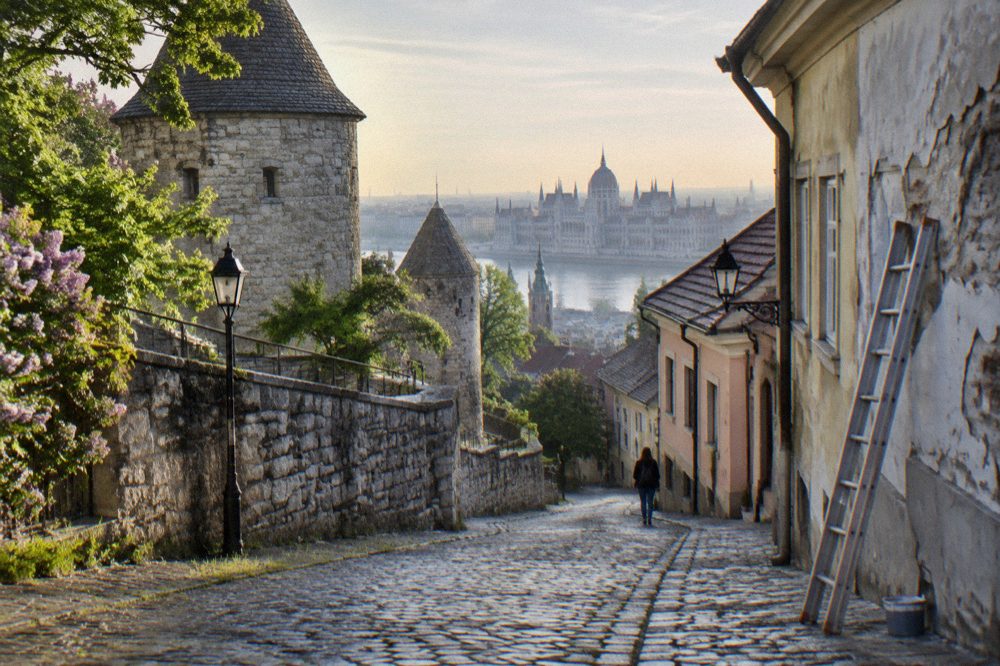
Fisherman's Bastion is the pair of facts most worth memorising. The lower terraces are free always. The upper terraces and turrets are ticketed at HUF 1,700 in the listed paid periods, and free on 15 March, 20 August, 23 October and 24 to 31 December. Those three autumn and spring dates are national holidays on which several state operators open free, which makes them unusually good dates for a budget itinerary. The Bastion's own closing hour is not published; the details live in Is Fisherman's Bastion Free?.
The free guided layer on the hill is strong enough that a budget visitor does not need to buy a paid castle tour at all. The Luna Tours English Castle Walk, run by Luna Tours Budapest on GuruWalk, is rated 4.67 out of 5 across 1,281 GuruWalk reviews, runs 2 hours 15 minutes in English, and meets at Holy Trinity Square in the Castle District.
Two more GuruWalk listings push the same free format further. Castle Underground Hidden Gems, guided by Matthew, is rated 4.91 out of 5 across 559 GuruWalk reviews, 2 hours 15 minutes in English, meeting at Matthias Church. Castle Hidden Gems, Small Groups, from Advanced Xperience Buda, is rated 4.68 out of 5 across 737 GuruWalk reviews, runs 2 hours, and lists German, English, Italian, Russian and Turkish, meeting at Hess Andras Square.
The small-group listing is the one to look at when the meeting point matters more than the review pool: it gathers at Hess Andras Square, on the hill itself, so a visitor already up on Castle Hill can join without coming back down. Its 737-review pool against the underground walk's 559 is a difference of scale, not of quality; both ratings sit in the same band on the GuruWalk five-point scale.
Add it up and the hill's budget arithmetic is clean. Walking the hill: free. The stairs up: free. A guided English walk with a four-figure review pool: free, pay what you want. The paid parts are the two museums, the church interior and tower, the Bastion's upper terraces outside the free dates, and the funicular. A visitor who does only the free layer still gets the hill, the views and the commentary.
Which Budapest Museums Have Real Free Days?
Four state museums open their doors free on national holidays. The Hungarian National Museum is free for all visitors on 15 March, 20 August and 23 October, and on the third Saturday of the month for Hungarian and EEA citizens under 26 and families. The Museum of Ethnography matches the third Saturday and the three holidays. The Museum of Hungarian Agriculture is free on the holidays.
Museum free days in Budapest are not a citywide scheme. Each museum runs its own regime, published on its own page, and the differences between them are exactly where budget visitors lose money. The two rules most often confused are the National Museum's third-Saturday rule, which is limited to Hungarian and EEA citizens under 26 and families, and its three holiday dates, which are free for absolutely everyone. There is no "free for EU under 26" rule at the National Museum, and no "museums are free on Saturday" rule anywhere in the city.
| Museum | Free for all visitors | Other verified free categories | Standard adult ticket |
|---|---|---|---|
| Hungarian National Museum | 15 March, 20 August, 23 October | Third Saturday: Hungarian and EEA citizens under 26 and families; under 6, over 70, disabled visitors | HUF 3,500 |
| Museum of Ethnography | 15 March, 20 August, 23 October | Third Saturday: same categories as its own page; EEA 6-26 and 62-70 pay half | on the museum's own page |
| Museum of Hungarian Agriculture | 15 March, 20 August, 23 October | Monthly free day for under-26s and families, day not named | HUF 3,600 |
| Museum of Fine Arts | no holiday rule read | Half price for EEA 6-26 and 62-70; over 70 free on request | HUF 5,800 |
| Holocaust Memorial Center | no holiday rule read | Free for EEA under 6, over 70, disabled visitors and teachers | HUF 3,600 |
The half-price column matters as much as the free column for anyone aged 6 to 26 or 62 to 70 with EEA citizenship. At the Museum of Fine Arts the half price is HUF 2,900 against the HUF 5,800 full ticket. At the National Museum it is HUF 1,750 against HUF 3,500. Those concessions are age-and-citizenship rules from each museum's own page, not a general European discount, and they do not transfer to the House of Terror, the Ludwig Museum, the National Gallery or the Castle Museum, which charge a normal ticket and list no free day or concession scheme of their own.
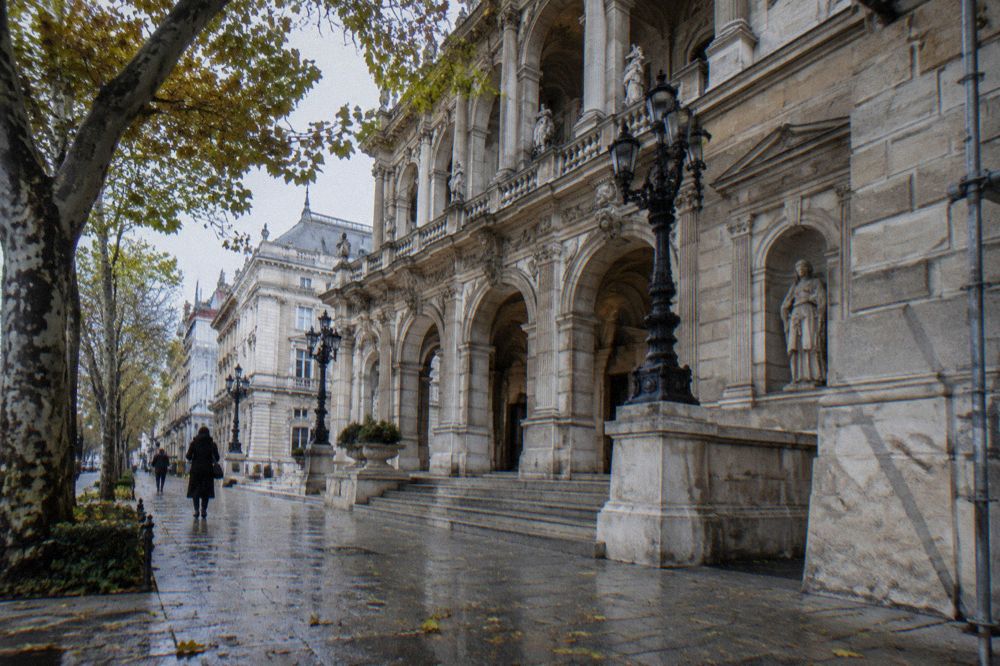
For planning purposes the three national holidays do the most work. A trip that lands on 15 March, 20 August or 23 October gets the National Museum, the Museum of Ethnography and the Museum of Hungarian Agriculture free for everyone, plus the Fisherman's Bastion upper terraces free, all on the same date. That is the single cheapest sightseeing day the free-entry rules allow. The wider museum landscape, including which museums charge and which publish no price, is laid out in Budapest Free Museums and in Are Budapest Museums Free On National Holidays?.
What Do The Big Landmarks Charge, And What Stays Free?
The Parliament interior is a paid guided visit for everyone, EU citizens included: HUF 7,000 for EEA visitors, HUF 14,000 for non-EEA, with student rates and free entry only for children under 6. The Matthias Church interior costs HUF 3,400 and the tower HUF 4,000. St Stephen's Basilica's church hall is ticketed, and the Panorama Terrace is a separate ticket.
The Parliament is the trap worth repeating, because the wrong version of its rule circulates widely. The interior is a paid guided visit for every visitor, and the price depends on citizenship: EEA adults pay HUF 7,000, EEA students aged 6 to 24 pay HUF 3,500, non-EEA adults pay HUF 14,000 and non-EEA students HUF 7,000. Only children under 6 enter free. There is no free day and no EU-free rule. What is free is the exterior and Kossuth Square, which are public ground. The full breakdown is in Is The Hungarian Parliament Free? and in the site's Parliament guide.
St Stephen's Basilica is stated plainly and without a price: the church hall is ticketed per the official page, and the Panorama Terrace is a separate ticket. The official page gives no price. The Basilica's own guide covers the record in full.
| Landmark | Free part | Paid part | Price |
|---|---|---|---|
| Hungarian Parliament | Exterior and Kossuth Square | Interior guided visit | EEA HUF 7,000, students HUF 3,500; non-EEA HUF 14,000, students HUF 7,000; under 6 free |
| Matthias Church | Exterior | Interior; tower | HUF 3,400 interior, HUF 4,000 tower, separate tickets |
| Fisherman's Bastion | Lower terraces, always | Upper terraces and turrets in paid periods | HUF 1,700; free 15 March, 20 August, 23 October, 24-31 December |
| Citadella | Park, viewpoints, promenade, Liberty Statue | Bastion of Liberty exhibition and Roof Garden 360 | HUF 4,900 adult |
| St Stephen's Basilica | none stated | Church hall; Panorama Terrace | on the walk's own page |
| Széchenyi Thermal Bath | none | Daily ticket | from HUF 13,200 weekday with locker |
The Citadella row is the one genuinely new free ground on Gellért Hill. The renewed Citadella is open to all free of charge in opening hours: the inner park, the new viewpoints on the fortress walls, the promenade and the Liberty Statue. The Bastion of Liberty exhibition and the Roof Garden 360 need a ticket at HUF 4,900 for an adult, and the park hours are published by the operator as 6:00 to 24:00 from April to October and 8:00 to 22:00 from November to March, per the operator's ticket information page. The hill and its viewpoints are covered in Gellért Hill And The Citadella.
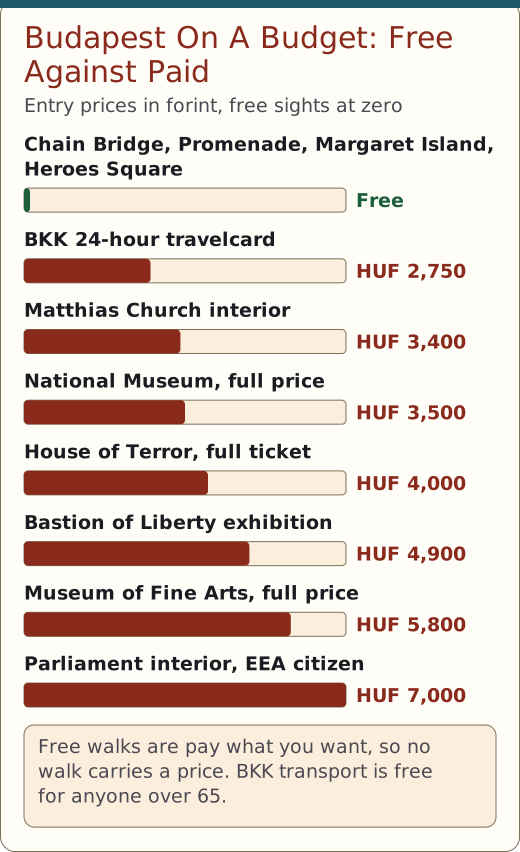
Read the table as a menu rather than a verdict. A budget visitor who walks the Parliament exterior, the Basilica's square, the Citadella park and the Bastion's lower terraces pays nothing at any of them. A visitor who buys every interior and terrace on the list pays for each ticket separately, as the table shows. Both see the same city from the same squares. The difference is entirely in which doors they walked through.
How Do You Get Around Budapest Without Paying For Taxis?
BKK public transport is paid for visitors, with fares and passes sold in HUF. Two categories ride free: anyone over 65 of any nationality with an identity document, and children under 6 accompanied by an adult. EU citizens under 65 pay full fare. The Buda Castle Funicular and Zugliget Chairlift are separate BKV tickets and do not run between 5 and 16 October 2026.
Transport is the quiet half of a Budapest budget because the rules are age-based, not citizenship-based, in one direction only. Anyone over 65 of any nationality rides BKK free with an identity document. Everyone else pays, including EU citizens under 65, and the student discount route tightened: from 15 June 2026, EU, EEA or Swiss and international student IDs need a Hungarian address document or an accommodation certificate for student travel discounts, per BKK's discounts page. Visitors under 65 without that document should plan on full fares.
The funicular and the chairlift sit outside the BKK system entirely. Both are separate BKV tickets, and both stop running between 5 and 16 October 2026 for annual maintenance, with additional set Monday closures outside those weeks, per BKV's funicular page. The free alternative up Castle Hill, the stairs, costs nothing and needs no timetable.
The baths row deserves its own sentence because it is the one place a budget plan can be wrecked by a closure rather than a price. Gellért Thermal Bath is closed, with reopening planned for 2028, so it is neither free nor paid now. Széchenyi is the paid alternative, from HUF 13,200 for a weekday daily ticket with locker. The question of whether any of it is free is answered in Is Széchenyi Baths Free?.
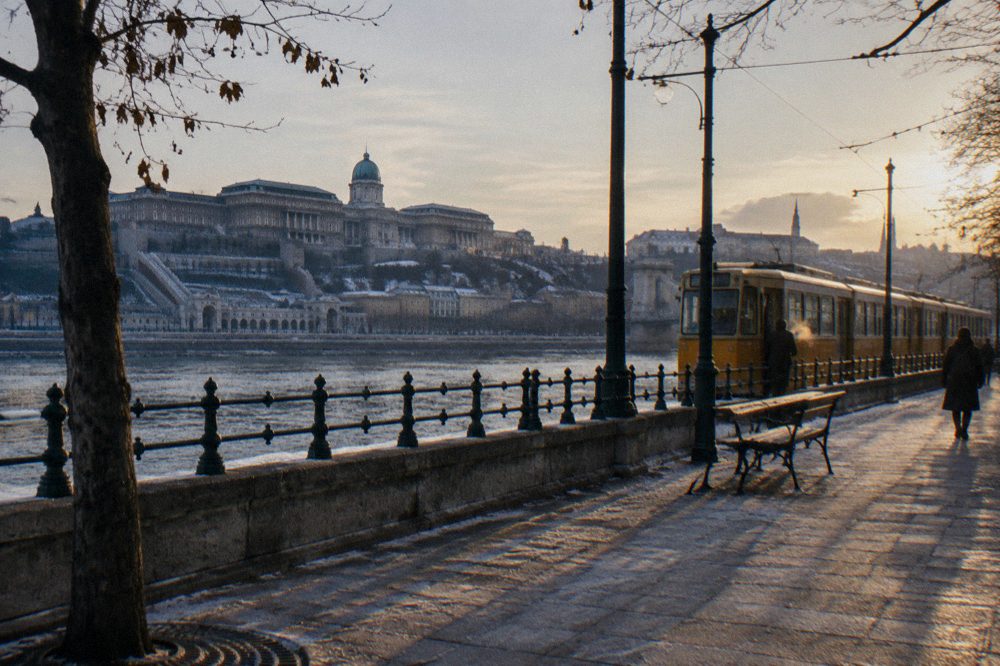
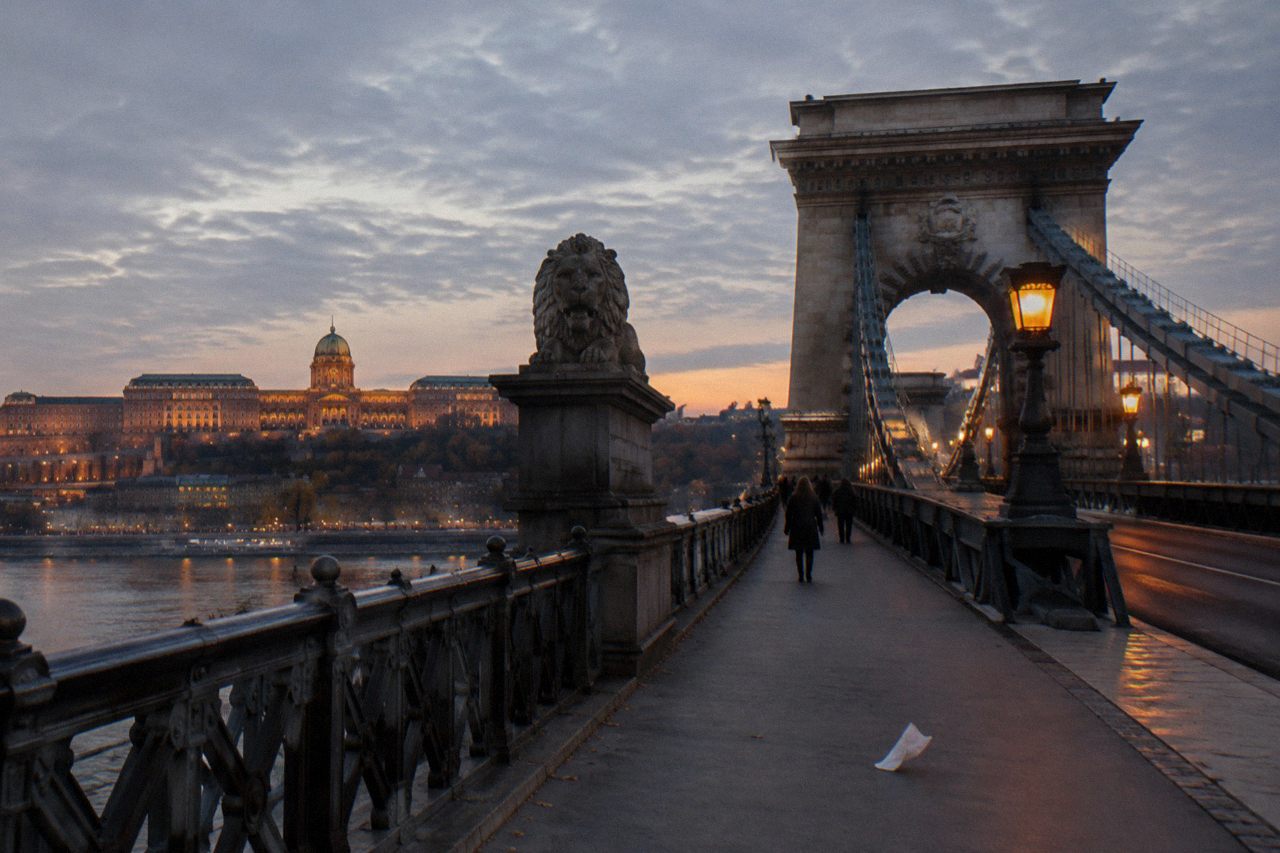
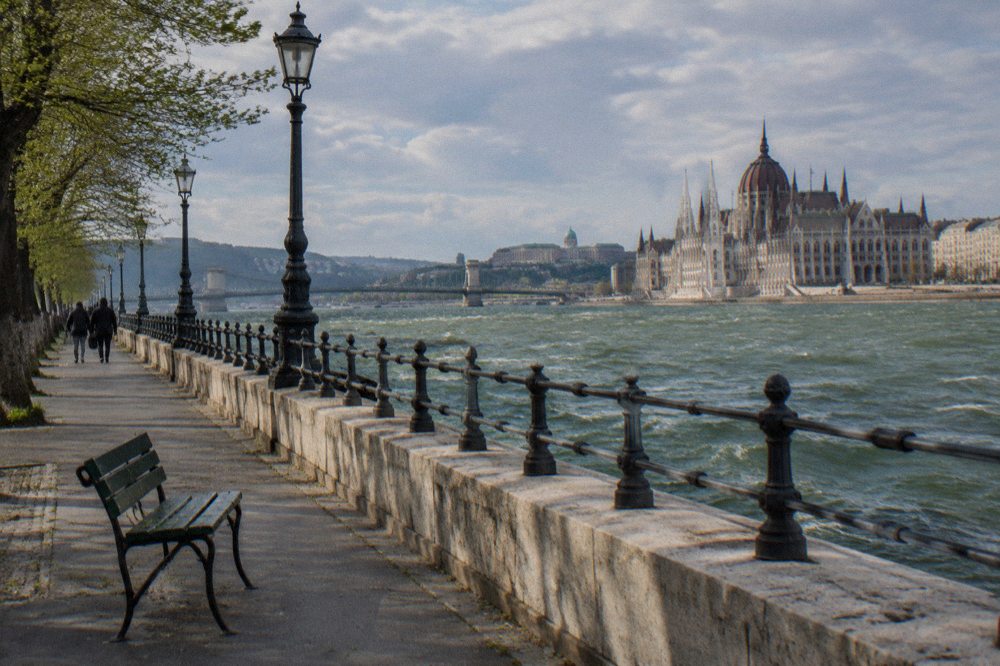
For sightseeing rather than movement, the riverside tram tracks and the Danube embankments are free to walk and need no ticket at all. The Chain Bridge promenade is public ground. Heroes' Square and City Park are free to walk, while the museums around them are ticketed, a split covered in Heroes' Square And City Park. A visitor who plans days around free outdoor corridors and buys transport only to cross between them keeps the transport line of the budget small and predictable.
What Can You Do In Budapest At Night For Free?
The Danube banks, the Chain Bridge promenade and the lit castle skyline cost nothing after dark. Free night walking tours exist on the roster: an English riverside night lights walk of 1 hour 45 minutes rated 4.79 out of 5 across 226 GuruWalk reviews, an English after-dark walk of 2 hours 30 minutes, and a Spanish night walk on freetour.com rated 9.3 out of 10 across 649 reviews.
Evenings are where a budget trip either holds or breaks, because the paid evening temptations, bars with covers, dinner strips, paid river cruises, are all marketed hard. The free evening layer in Budapest is unusually strong. The riverbank walk between the Parliament and the Chain Bridge costs nothing. The castle skyline from the Pest side after dark costs nothing. And the roster carries night walks in the same pay-what-you-want format as the daytime ones.
The English options are two. The Riverside Night Lights walk, guided by Susy on GuruWalk, runs 1 hour 45 minutes, rated 4.79 out of 5 across 226 GuruWalk reviews, meeting at Jaszai Mari Square. The After Dark Night Walk, guided by George on GuruWalk, runs 2 hours 30 minutes, rated 4.8 out of 5 across 50 GuruWalk reviews, meeting at St Stephen's Basilica. The Spanish night walk from Paseando por Europa runs on freetour.com, 2 hours, rated 9.3 out of 10 across 649 freetour.com reviews, meeting at Liszt Ferenc Square. Note the scale difference: freetour.com ratings are out of 10 and are never converted to the five-point scale.
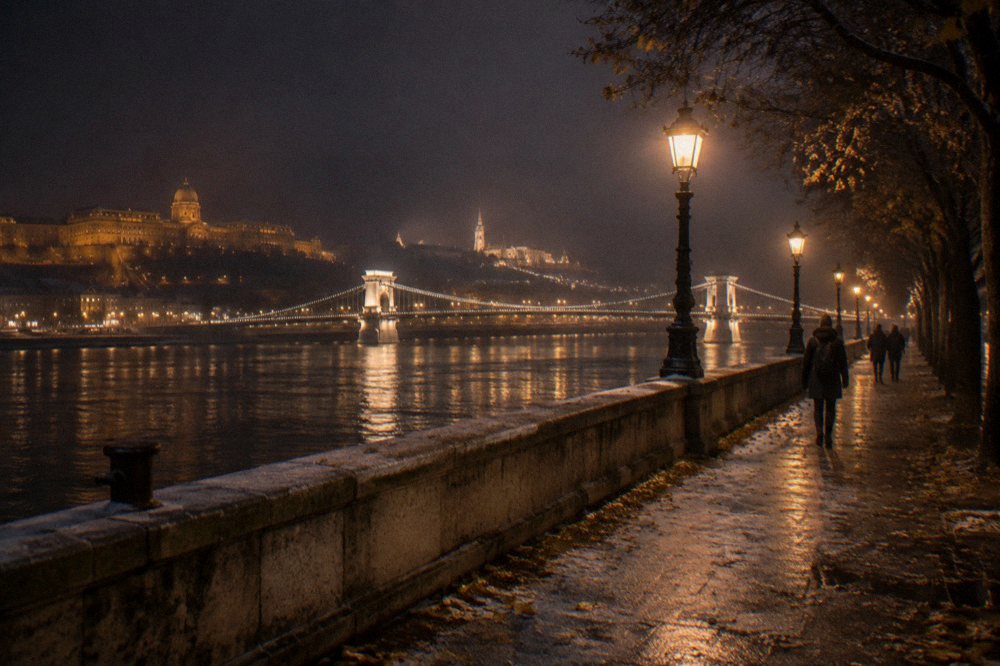
The night layer connects to the rest of the budget plan through the ruin bar question. Budapest's ruin bars are the city's famous free-entry evening ground, and their rules and records have their own guide in Budapest Ruin Bars. Night safety, a separate question with its own answer, is covered in Is It Safe To Walk Around Budapest At Night?. The wider night landscape, including what the castle hill and the riverbank offer after dark, is in Budapest At Night.
Put together, a free evening in Budapest can run: a night walk on GuruWalk or freetour.com, a riverbank stroll on either end of it, and a ruin bar with no cover. The only forced spend is whatever you choose to drink, and prices are not published.
How Do You Build The Cheapest Possible Budapest Day?
Take one free walking tour as the spine, walk free public ground on either side of it, and buy nothing except where a place has a genuinely free window, such as a museum's free-entry day. A day built this way uses the 45 free walks, the castle hill streets, the Citadella park and the riverbank, and spends only on food and any transport beyond walking distance.
The mechanics of a cheap day follow directly from everything above, and this site, Free Things To Do In Budapest, exists to make that split legible. The pattern that works is simple. Pick a walk from the roster by its meeting point and language, not by its review count alone. Walk to the meeting point if the distance is walkable, since BKK is paid for visitors under 65. Let the walk structure the middle of the day. Fill the edges with free outdoor ground: a square, a riverbank, a hill.
The paid decisions should be made in advance, not on the spot, because every paid part in this guide has a printed price you can check against your budget before you leave. The Parliament interior at HUF 7,000 or 14,000 depending on citizenship. The Matthias Church at HUF 3,400 plus HUF 4,000 for the tower. The Bastion's upper terraces at HUF 1,700, or free if your date is one of the four free dates. The Citadella exhibition at HUF 4,900, or skipped entirely in favour of the free park and viewpoints. None of these is a surprise at the door.
And the free windows should be planned around, not discovered. The three national holidays open the National Museum, the Ethnography Museum, the Agriculture Museum and the Bastion terraces to everyone at once. The third Saturday opens the National Museum and the Ethnography Museum to Hungarian and EEA visitors under 26 and families. The over-65 transport rule makes the whole city legible for free to anyone with an ID document and a 65th birthday behind them. Seasonal closures cut the other way: the funicular and chairlift in their maintenance window, Gellért bath to 2028.
The last budget lever is the winter question, since Budapest's cheapest season and its quietest season are the same one, and that trade-off is argued out in Budapest In Winter. Whatever the season, the frame holds: free walks as the spine, free ground as the body, paid interiors as deliberate, priced choices.
For the walks themselves, these are the featured English-language options that fit a budget day best, from the historic centre to the castle hill to the Parliament riverbank.
Common Questions About Budapest On A Budget
Is Budapest Actually A Cheap City To Visit?
The sightseeing layer is unusually cheap because the 45 free walking tours, the castle hill streets, the Citadella park and the riverbank all cost nothing. The paid layer has printed prices in HUF, from HUF 1,700 for the Bastion's upper terraces to HUF 14,000 for the non-EEA Parliament interior. A trip built on the free layer spends little; a trip buying every interior does not.
Are The Free Walking Tours In Budapest Really Free?
Yes. All 45 walks listed on this site, 38 on GuruWalk and 7 on freetour.com, are free or pay what you want, with no money figure attached to any walk. The payment is entirely at the visitor's discretion after the walk ends.
What Is Free On Buda Castle Hill?
The streets, ramparts and open courtyards of the hill are free public ground, the stairs up the hill are free, and Fisherman's Bastion's lower terraces are free at all times. The National Gallery, the Castle Museum, the Matthias Church interior and tower, the Bastion's upper terraces in paid periods and the funicular are separate paid records.
Which Budapest Museums Are Free On National Holidays?
The Hungarian National Museum, the Museum of Ethnography and the Museum of Hungarian Agriculture are free for all visitors on 15 March, 20 August and 23 October. Fisherman's Bastion's upper terraces are also free on those three dates plus 24 to 31 December. The Museum of Fine Arts, the House of Terror, the Ludwig Museum, the National Gallery and the Castle Museum charge normal admission, and none of their own pages lists a free day or concession scheme.
Is Public Transport Free For Seniors In Budapest?
Yes, for anyone over 65 of any nationality with an identity document, on BKK services. Children under 6 ride free with an adult. Everyone else pays, including EU citizens under 65, and from 15 June 2026 student discounts require a Hungarian address document or accommodation certificate.
What Does The Hungarian Parliament Interior Cost?
The interior is a paid guided visit for everyone, EU citizens included. EEA adults pay HUF 7,000 and EEA students aged 6 to 24 pay HUF 3,500; non-EEA adults pay HUF 14,000 and non-EEA students HUF 7,000. Only children under 6 enter free. The exterior and Kossuth Square are free to walk.